




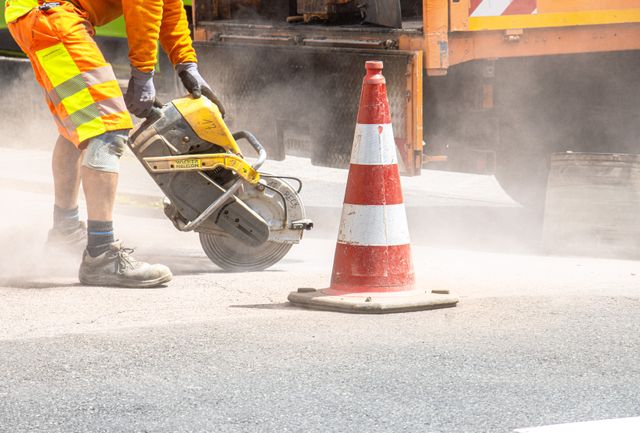
The lowest quote offered for concrete cutting jobs in Melbourne does not always represent the lowest total cost involved. With the scanning fees, waste removal costs, slurry clean-up and rectifying the damage that will be caused included, the cost savings will soon be offset. A search for concrete cutter Melbourne will reveal numerous choices, from small-scale sole traders who own one saw to large licensed companies with special machines. It is important to understand the differences before the job begins.
What is the Difference Between a Quote and a Commitment?
An experienced contractor should undertake an inspection at the job site to establish any utilities buried there and determine the saw required based on the depth and type of reinforcement. The quote should be determined only after carrying out the job site inspection. Low quotes often do not include the fees for scanning, waste removal and slurry clean-up, which are all charged as extra costs. Post-tensioned slabs that can be found all over Melbourne apartments and other reinforced structural members that may go wrong are cases where cheap quotes cannot be justified by the insurance coverage.
What Kind of Concrete Cutting Is Actually Possible?
The list of concrete cutting services that one may choose from is wider than what clients think initially:
- Concrete floor sawing for joint making and trench making as well as concrete slab removing in homes and buildings.
- Wall sawing for opening doors and windows in reinforced and post-tensioned concrete walls.
- Drilling of cores for plumbing and HVAC and electric conduit penetrations through any concrete thickness.
- Ring sawing for cuts when standard bed-type sawing cannot be done due to small space.
- Wire sawing for huge concrete removal and structural works.
Method choice based on the work needed comes during the evaluation phase.
Licensing, Insurance, and OH&S: What to Ask Before Any Work Begins
Every concrete cutting operation in Victoria has to meet the standards set by OH&S Codes of Practice as well as Australian Standards applicable to the type of saw being used. Those carrying out operations in a commercial construction site need different kinds of licenses, while different standards apply to domestic residential jobs. There is a risk of respiratory ailments from silica dust exposure during concrete cutting, which needs to be done using proper wet cut techniques.
Before beginning any work, ask whether the operator has insurance, what their scanning policy involves, and whether there will be an assessment of site safety measures. An authentic operator should have no problems responding to these questions.
Quality of Equipment and Its Effect on Your Project
Diamond-tipped blades and modern robotic demolition equipment provide much cleaner cuts compared to old abrasive disc technology, resulting in fewer cracks and less danger of compromising structure beyond the desired cutline. The vibration and stress generated by old and poorly maintained saws result in unintentional cracks. Contractors that use their own equipment, as opposed to rental, usually get better outcomes since they know the capabilities of their equipment.
The correct equipment to use on a 100 mm residential slab is very different from what should be used on 400 mm reinforced concrete. A concrete cutter in Melbourne that only uses one type of equipment does not have the capacity to handle all the jobs he quotes on.
When the Job Is Harder Than It Looks?
A job that calls for the cutting of post-tensioned concrete slabs must be done only after an X-ray or ground-penetrating radar scan, as a severed cable would cause severe structural problems, something that is not just theory but fact in Australia. The cutting of areas next to load-bearing walls or in structural transfer floors always requires a structural engineer’s assessment before the cutting begins. A heritage building with areas of unreinforced concrete requires slow, controlled cuts to prevent vibration damage to the surrounding masonry.
Structural analysis of the area is the engineer’s job, not the cutter’s.